Silvio Pellico was an Italian writer, poet, and dramatist who lived during the 19th century. He was born on June 24, 1789, in Saluzzo, and he passed away on January 31, 1854, in Turin, Italy. Pellico is best known for his role in the Italian unification movement and for his literary works.
Category: Books
Money and Banking
John Thom Holdsworth penned this volume with the hopes of creating a comprehensive history of monetary and banking systems in the United States. Holdsworth discusses the theory, history and principles of money, and more specific topics such as Federal reserve currency and foreign finance. This 1915 volume sheds light on the ideals of the monetary system in the United States and the goals of the federal government at that time in enacting certain policies, such as the Farm Loan Act and the Federal Reserve Act.
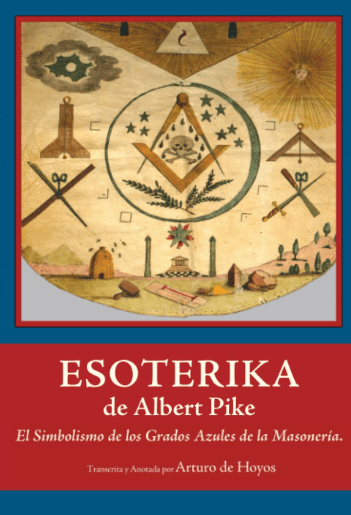
ESOTERIKA by Albert Pike: The Symbolism of the Blue Degrees of Freemasonry
Many of the Freemasonry symbols of our rituals are hidden from everyone in the Order. The symbolic degrees are a vault in which secrets and esoteric teachings are enclosed, whose origin and meaning were transmitted orally in antiquity, many of which today have been lost in the sands of time.

Blood Debts: What Putin and Xi Owe Their Victims
Blood Debts: What Putin and Xi Owe Their Victims goes to the core dilemma of world affairs—how to cope with two powerful dictatorships that have inflicted severe harm on their own peoples and menace their neighbors and the entire world. Global cooperation is needed to address global problems, but is it feasible to compromise with evil?

A League to Enforce Peace
Henry Edward Krehbiel (1854 – 1923) was an American music critic and author. Krehbiel’s interest in music developed at a young age, and he pursued his passion by studying music theory and composition. However, he soon turned to music criticism and journalism, becoming a prominent figure in the field. He wrote for various publications, including the New York Tribune and the New York Times, where he served as the chief music critic for many years.

Washington and the Hope of Peace
Henry Edward Krehbiel (1854 – 1923) was an American music critic and author. Krehbiel’s interest in music developed at a young age, and he pursued his passion by studying music theory and composition. However, he soon turned to music criticism and journalism, becoming a prominent figure in the field. He wrote for various publications, including the New York Tribune and the New York Times, where he served as the chief music critic for many years.

Afro-American Folk Songs: A Study in Racial and National Music
Henry Edward Krehbiel (1854 – 1923) was an American music critic and author. Krehbiel’s interest in music developed at a young age, and he pursued his passion by studying music theory and composition. However, he soon turned to music criticism and journalism, becoming a prominent figure in the field. He wrote for various publications, including the New York Tribune and the New York Times, where he served as the chief music critic for many years.
A Short History of Engraving and Etching: For the Use of Collectors and Students with Full Bibliography, Classified List and Index of Engravers
Arthur Mayger Hind (1880-1957) was a British art historian who worked at the British Museum. He attended the City of London School and Emmanuel College, Cambridge. He always maintained a focus on prints and engravings, with an emphasis on Italian artists. Despite having been written over a hundred years ago, A Short History of Engraving and Etching is considered a classic and excellent reference work.
An Historical Sketch of the Unitarian Movement Since the Reformation
Joseph Henry Allen (1820 – 1898) was a Unitarian clergyman and author from Massachusetts. He attended a school his father ran, and then later attended Harvard College, graduating from its Divinity School in 1843. From 1843-1857, he served as a clergyman in three different regions: Massachusetts, Maine and Washington DC. After 1857, he focused on teaching and writing. Some of his works included Ten Discourses on Orthodoxy (1849), A Latin Primer (1870), and Our Liberal Movement in Theology, chiefly as Shown in Recollections of the History of Unitarianism in New England (1882)

A Practical Guide to Whist: By the Latest Scientific Methods with the Laws of the Game
Whist is a unique, trick-taking card game that was developed in England during the 17th century. It requires four players, takes about 30 minutes to play a game, and uses a simple deck of cards to play. It is descended from a card game called trump or ruff.

The Pathway of Peace: Representative Addresses Delivered During His Term as Secretary of State (1921-1925)
Following his presidential campaign, Hughes served as Secretary of State under President Warren G. Harding from 1921 to 1925. As Secretary of State, he advocated for disarmament and worked to improve international relations in the aftermath of World War I. He played a significant role in negotiating the Washington Naval Treaty of 1922, which aimed to limit the naval arms race among major world powers. After leaving public office, Hughes returned to private legal practice and continued to be involved in various public causes. He was a vocal advocate for civil rights, and he played a significant role in promoting legal and social reforms throughout his career.
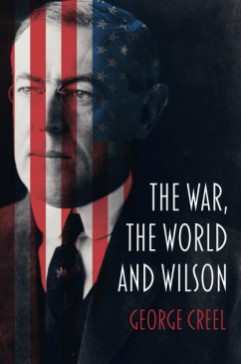
The War, the World and Wilson
George Creel (1876-1953) was an American journalist, writer, and political activist. He is best known for his role as the head of the United States Committee on Public Information (CPI) during World War I, which shaped public opinion in support of the war effort. The CPI employed various methods of propaganda, such as newspapers, posters, speeches, and other media to promote patriotism, generate support for the war, and sway public opinion in favor of the United States’ involvement in the conflict.
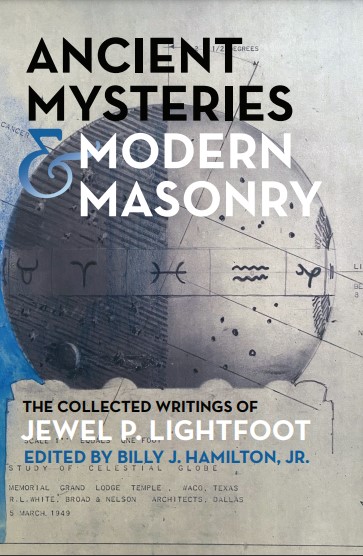
Ancient Mysteries and Modern Masonry: The Collected Writings of Jewel P. Lightfoot
Jewel P. Lightfoot. Former Attorney General of the State of Texas. Past Grand Master of the Masonic Grand Lodge of Texas. From humble beginnings in rural Arkansas, he worked to become an educated man who excelled in law and Freemasonry. He was a gentleman of his time, well-known as a scholar, public speaker, and Masonic philosopher.
This book contains Brother Lightfoot’s recently discovered speeches, essays, and personal notes. In these pages, he walks us through a journey of Masonic symbolism and customs originating in ancient Brahman practices, which were transmitted through the Chaldeans, Egyptians, Hebrews, and into Renaissance Europe.

How the Rampant Proliferation of Disinformation Has Become the New Pandemic, and What To Do About It
How the Rampant Proliferation of Disinformation has become the new Pandemic, examines the causes of the overwhelming tidal wave of fake news, misinformation, disinformation, and propaganda, and the increase in information illiteracy and mistrust in higher education and traditional, vetted news outlets that make fact-checking a priority.
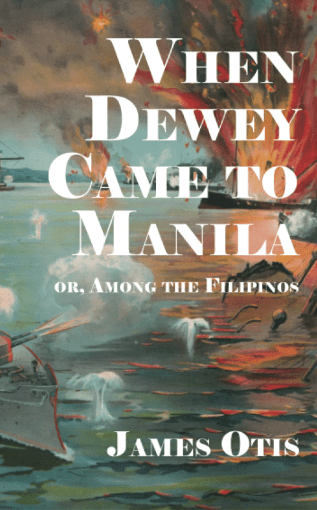
When Dewey Came to Manila; or, Among the Filipinos
This work, When Dewey Went to Manila, or, Among the Filipinos, was originally published in 1899 as a historical juvenile novel. It focuses on the Spanish-American War, and the American occupation of Manila Bay led by Commodore George Dewey in 1898.

Successful Patents: A Conservative, Reliable and Complete Treatise on the Protection of Ideas by Patents, Trade-Marks, Designs and Copyrights
This was volume was originally published in 1912. Richard B. Owen had offices in Washington DC and advertised in various magazines, such as Popular Mechanics, in order to gain interest in his patent law enthusiasms.
Chips from the White House: Or, Selections from the Speeches, Conversations, Diaries, Letters, and Other Writings, of all the Presidents of the United States
Jeremiah Chaplin (1776 – 1841) was a theologian, educator and an author. He was born in 1776 in Massachusetts, later attending Brown University. After he graduated, he remained studying theology while tutoring students at Brown. In 1802, he moved to Danvers, Massachusetts in order to minister a Baptist church there. He remained there until 1817, when an opportunity to become president of Waterville College became available to Chaplin. He remained in that role until 1833. Afterwards he focused on preaching throughout Massachusetts, Connecticut and New York. Chaplin wrote books, but often not related to theology, including: The Life of Benjamin Franklin (1876) and Words of our Hero, Ulysses S. Grant (1886).

Sinking into the Honey Trap: The Case of the Israeli-Palestinian Conflict
Sinking into the Honey Trap: The Case of the Israeli-Palestinian Conflict describes how Israeli society has positioned itself in the comfort zone, ignoring the reality in which it exists. It is about the story they tell us, and most of the people accept it. This story shapes the consciousness of the Israeli Jewish society, by explaining the half truth about the past, hiding the present and describing a deceptive vision for the future. It explains the mechanisms that make it possible to ignore the reality and live in a situation that prolongs the conflict with the Palestinians and push the solution to an unseen future with ongoing violence.
Our Engines of War, and How We Got to Make Them
Henry Jervis-White Jervis (1825-1881) was an author, a British army officer and a politician. He was interested in the military, and attended the Royal Military Academy in Woolrich. Afterwards, he joined the Royal Artillery in 1844. During his military career, he also became interested in politics. His first attempt for parliament in 1857 was unsuccessful, but later in 1859 he was elected as Member of Parliament for Harwich. In 1863, Jervis-White-Jervis was elected as the deputy chairman of the Great Eastern Railway, where he was able to make several much needed changes. He remained in politics until 1880. During this time, he also wrote several books, including Manual of Field Operations, History of Corfu and of the Ionian Islands, and The Enfield Rifle.
Essay on The Mysteries and the True Object of The Brotherhood of Freemasons: Considerably expanded and corrected from the original in 1776
There is a need for a third edition of Essai sur les mystères. The first English translation (W.H. Reece, 1862) is long out of print and contains errors that may hinder readers’ comprehension of the anonymous 1771 letter it contains. This version, discovered in the Biblioteca Nazionale Centrale di Roma, has edits made to the French by an unknown editor in 1776, potentially making it more faithful to the original. The revisions range from minor corrections to significant changes, such as altering the recipient’s gender. However, the identity of the author and recipient may not be all that germane to the timeless message here: Freemasonry’s role as a society of symbolic philosophers who cultivate their minds, practice virtues, and engage in charity. Additionally, this work compares Freemasonry and ancient mystery groups, underscoring the importance of brotherhood, morality, and goodwill, and also addresses the deceitful attacks Masons have endured for centuries.
War Between Japan and Russia: With Historical and Descriptive Sketches of Russia, Siberia, Japan, Korea and Manchuria
War Between Japan and Russia focuses on the Russo-Japanese War fought between 1904–05, and gives additional insight onto the region with numerous photographs. The war began after Russia initiated a campaign of expansionist policy into East Asia. Japan launched an offensive, successful military campaign, which led Russia to abandon its efforts in the region.
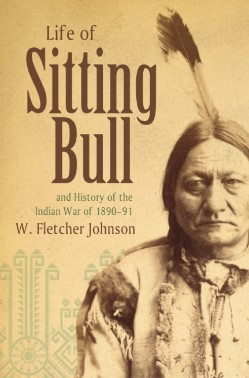
Life of Sitting Bull and History of the Indian War of 1890-91
Lydia Maria Child (1802 –1880) was many things, but always an activist. She was deeply involved in many causes, including aSitting Bull (1831 – 1890) was a Hunkpapa Lakota leader who fought tirelessly against the United States’ genocidal policies. During an attempt to arrest him, he was killed on the Standing Rock Indian Reservation during an attempt to arrest him. Sitting Bull (Lakota: Tȟatȟáŋka Íyotake) became a target of the US government after his success at the Battle of Little Bighorn, where the confederated Lakota tribes and the Northern Cheyenne annihilated defeated the 7th Cavalry under Lt. Col. George Armstrong Custer on June 25, 1876. bolition, women’s rights, indigenous rights, and opposing American expansionism. Writer by trade, she was the editor of The National Anti-Slavery Standard, and she wrote novels, domestic manuals, edited a children’s magazine, and much more. She also was a philanthropist and assisted many causes, artists and musicians financially.

Letters of Lydia Maria Child: With a Biographical Introduction
Lydia Maria Child (1802 –1880) was many things, but always an activist. She was deeply involved in many causes, including abolition, women’s rights, indigenous rights, and opposing American expansionism. Writer by trade, she was the editor of The National Anti-Slavery Standard, and she wrote novels, domestic manuals, edited a children’s magazine, and much more. She also was a philanthropist and assisted many causes, artists and musicians financially.
James Hoban’s Secret Society
James Hoban’s Secret Society is a pocket guide to Hoban’s fraternal legacy. This concise history delineates the opportunity and rise of a skilled immigrant craftsman in colonial America. Hoban’s family-centric approach to his work helped establish a tight-knit group of professional woodworkers who stayed with him throughout his entire career. Hoban’s work brought credibility and notoriety to the Irish Labor Movement of the 18th century.
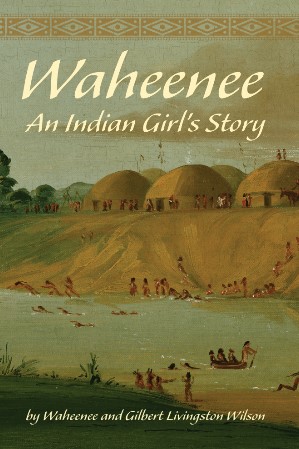
Waheenee: An Indian Girl’s Story
Waheenee-wea was born in 1839, approximately two to three years after a devastating small pox outbreak. This work tells the life of Waheenee, including her great-grandmother, White Corn, and grandmother, Turtle, and the many stories she grew up with, alongside her own life experiences.
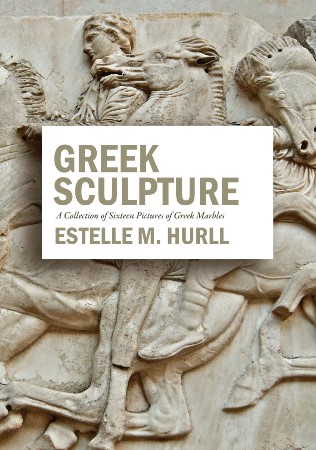
Greek Sculpture: A Collection of Sixteen Pictures of Greek Marbles
For this work, Hurrl selected 16 Greek marbles including: The Faun of Praxiteles, Sophocles, Ares, Olympian Hermes, The Discobolus, Zeus Otricoli, Athena Giustiniana, Horsemen from the Parthenon Frieze, Bust of Hera, The Apoxyomenos, Apollo Belvedere, Nike, Pericles, Demeter (Ceres), The Venus of Milo, Orpheus and Eurydice.

Diary of Anna Green Winslow: A Boston School Girl
In this collection of letters to her mother from 1771-3, Anna Green Winslow sheds light on daily life of the wealthy in the Boston area during the beginnings of the American Revolution. The collection was edited by Alice Morse Earle for this publication.

The Book of Wheat: An Economic History and Practical Manual of the Wheat Industry
This work details the history of the grain trade as it was practiced in the United States up to the early 1900s.
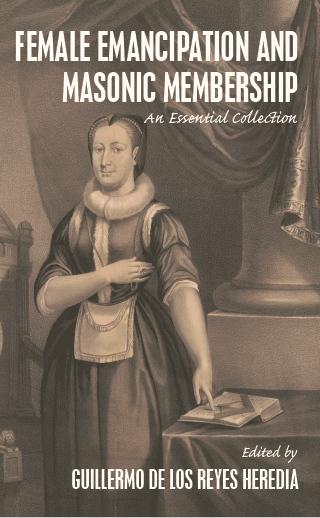
Female Emancipation and Masonic Membership: An Essential Collection
Female Emancipation and Masonic Membership: An Essential Combination is a collection of essays on Freemasonry and gender that promotes a transatlantic discussion of the study of the history of women and Freemasonry and their contribution in different countries such as Cuba, Chile, France, Mexico, Spain, and the United States.

A Manual Of Harmony
Of this work, A Manual of Harmony, Jadassohn suggested, “A thorough and complete knowledge of the chords and their inter-combination, such as the artist needs not only for original free composition, but also for preluding and modulating, and for a correct and intelligent rendition of mater-works, can be attained solely by means of earnest, diligent, and preserving work.”
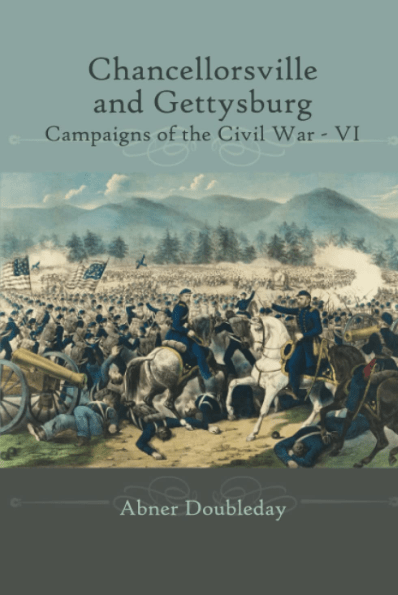
Chancellorsville and Gettysburg: Campaigns of the Civil War VI
Abner Doubleday was born in 1819 in Ballston Spa, NY. Many members of his family served in the military, including his father, who fought in the War of 1812, and later became a congressman. Doubleday studied at the US Military Academy, and then served in numerous conflicts, including the Mexican-American War. During the Civil War launched the first return shot at Fort Sumter on April 12, 1861. A month after this he was promoted to major, and then brigadier general, seeing action across the mid-Atlantic area in particular. This work, as the title suggests, focuses on his experiences at the Battle of Gettysburg, which began on July 1, 1863.

Money in Politics
Jacob Kendrick Upton Sr. was born in Wilmot, New Hampshire on October 9, 1837. His path to becoming a lawyer began by graduating from the Literary and Scientific Institution at New London, New Hampshire in 1860. Afterwards, he and his brother studied law in Manchester, New Hampshire. During this time, he also worked as a clerk in the Treasury Department. He continued to find success in the Treasury Department, and eventually worked his way through several promotions until becoming Chief Clerk in March 1877. He found a great deal of prominence in this position, and became Assistant Secretary of the Treasury in 1880. However, he resigned from the role after the inauguration of President Grover Cleveland. After then, he split his career interests between law, banking and writing. He wrote several articles and books on financial topics, but this work, Money in Politics, originally released in 1884, was his most well known.

The Light of Asia: Being the Life and Teaching of Gôtama, Prince of India and Founder of Buddhism
The Light of Asia was the most popular work produced by Sir Edwin Arnold, an English poet and journalist. This work is also known as The Great Renunciation (Mahâbhinishkramana). The Light of Asia is a narrative poem that focuses on presenting the life and context of Prince Gautama Buddha, and is considered an adaptation of the Lalitavistara. While Buddhism was well-known across Asia, outside of the continent, very little was known. The Light of Asia helped spread knowledge and awareness of Buddhism around the world, particularly for a Western audience. Since its original publication, it has been translated into over thirty languages.

Familiar Letters of John Adams and His Wife Abigail Adams During the Revolution with a Memoir of Mrs. Adams
Abigail Adams (1744-1818) was a founder of the United States. Despite much of the gendered politics that pushed women away from politics, Abigail and her husband, John Adams, corresponded frequently about politics and the new government formation. John Adams served as the second president of the United States, from 1797 to 1801.
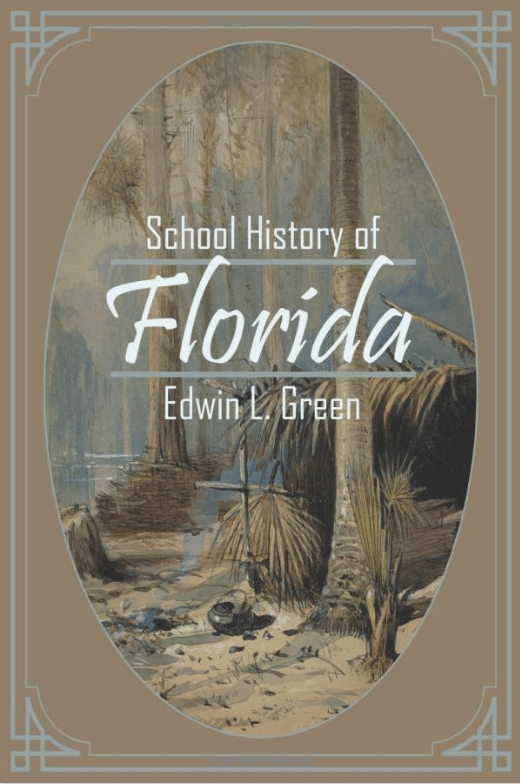
School History of Florida
Author Edwin L. Green was asked by William N. Sheats, the Superintendent of Public Instruction of Florida, to write a history of the state to be used in public schools. Green began his work with Juan Ponce de Leon’s voyages and his happening upon what is now known as Florida. Other key moments he discusses include French, Spanish and other influences throughout the region, indigenous history and religion, the founding of St. Augustine and Spanish missions, Florida becoming a territory and then a state, the Seminole War, the Civil War and its aftermath up to 1898 when this work was published.
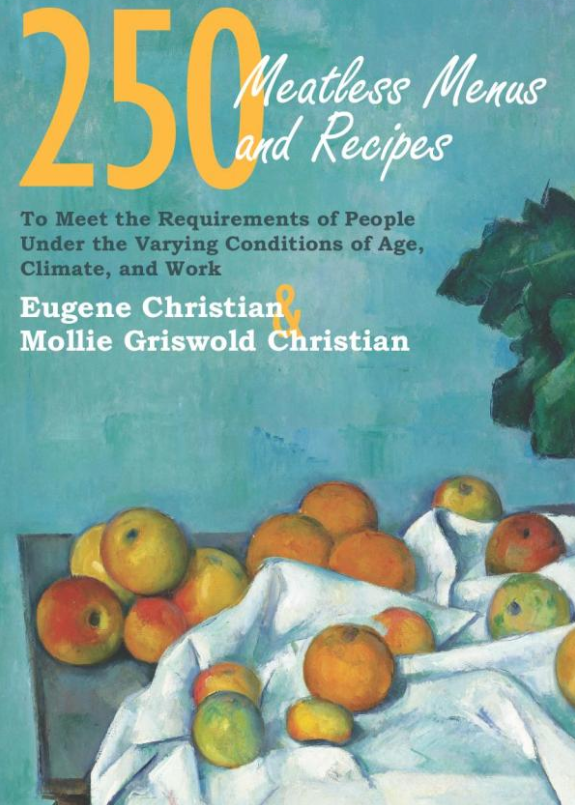
250 Meatless Menus and Recipes: To Meet the Requirements of People Under the Varying Conditions of Age, Climate and Work
When this book was originally published in 1910, there was not a great deal of writing about vegetarian diets. The Christians considered themselves dietary, and life experts, and wrote this book which details not only recipes, but also thoughts on the morality of smoking, excess eating, drinking and childrearing. Their form of vegetarian cooking focuses on uncooked food preparation.
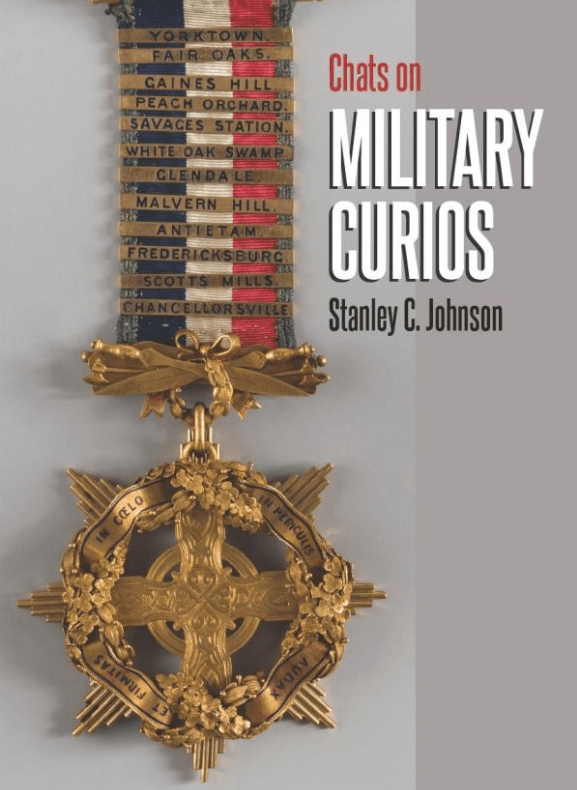
Chats On Military Curios
Author Stanley C. Johnson opens up this work on collecting military objects with the following, “For centuries past the collection of military curios has been the select pastime of men of title and soldiers of rank. Lately, however, owing to the War and the great spread of interest in all things pertaining to it, the circle of collectors has considerably widened, until to-day few things are more treasured by connoisseurs than the thousand and one souvenirs and emblems which emanate from our Army…With many forms of collecting there is a certain sameness about the things collected which is apt to produce monotony: with military curios, however, the treasures cover so wide a field that no such drawback can exist.”
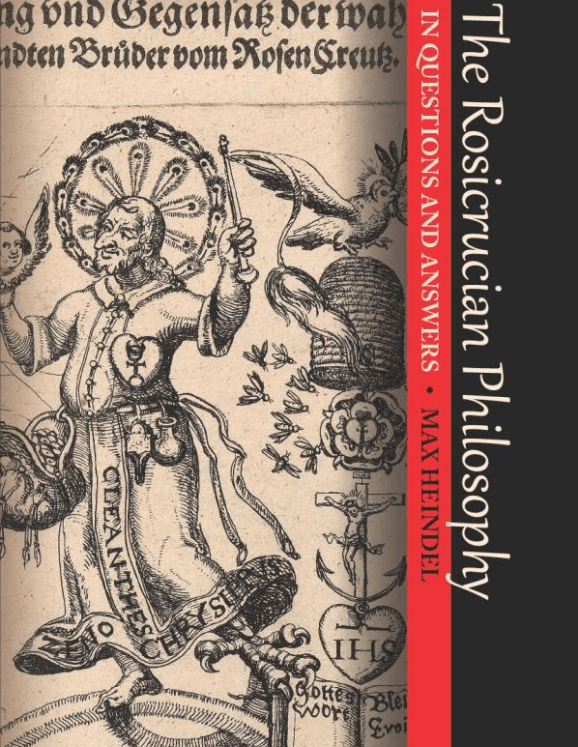
The Rosicrucian Philosophy in Questions and Answers
Rosicrucianism emerged in Europe possibly as early as the 1500s. It had numerous influences. As Michael Maier, a Rosicrucian described it, “Our origins are Egyptian, Brahminic, derived from the mysteries of Eleusis and Samothrace, the Magi of Persia, the Pythagoreans, and the Arabs.” During the 1600s, interest in it throughout Europe spread with the publication of numerous manifestos. Today, there are many groups of Rosicrucians including Masonic Rosicrucian organizations and Esoteric Christian Rosicrucians.

Florida: Its Scenery, Climate, and History: with an Account of Charleston, Savannah, Augusta, and Aiken and a Chapter For Consumptives
Sidney Lanier (1842-1881) wrote this account of Florida. Of it he stated, “The newspapers have abounded with communications from clever correspondents who have done the State in a week or two; the magazinists have chatted very pleasantly of St. Augustine and the Indian River country; and there are half a dozen guide-books giving more or less details of the routes, hotels, and principal stopping-points. But it is not in clever newspaper paragraphs, it is not in chatty magazine papers, it is not in guide-books written while the cars are running, that the enormous phenomenon of Florida is to be disposed of. There are at least claims here which reach into some of the deepest needs of modern life.”
A Short Unitarian History
Unitarianism is a theological movement which at its start proclaimed that God is a singular entity, rather than a trinity. It rejects other tenants common in Christianity, such as the concept of original sin and the Bible as infallible. The belief emerged during the 1600s and spread quickly through Europe and the United States, particularly among the educated and wealthy classes. One of the earliest places it arrived in the United States was in New England.
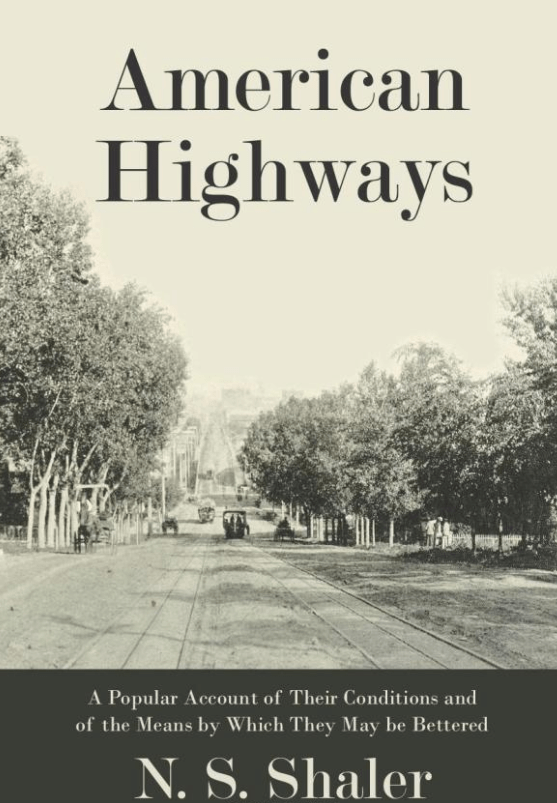
American Highways: A Popular Account of Their Conditions and of the Means by Which They May be Bettered
Nathaniel Southgate Shaler (1841-1906) studied at Harvard College and then went on to become a professor in paleontology there. Although he was from Kentucky, he served in the Union Army as an officer during the Civil war. However, he was an apologist for slavery, and in an 1884 Atlantic Monthly article stated that slavery in the US had been “infinitely the mildest and most decent system of slavery that ever existed.” This racism influenced his own teachings. Initially a creationist, he later became a proponent of Lamarckian theories, and an espouser of Aryan supremacy.
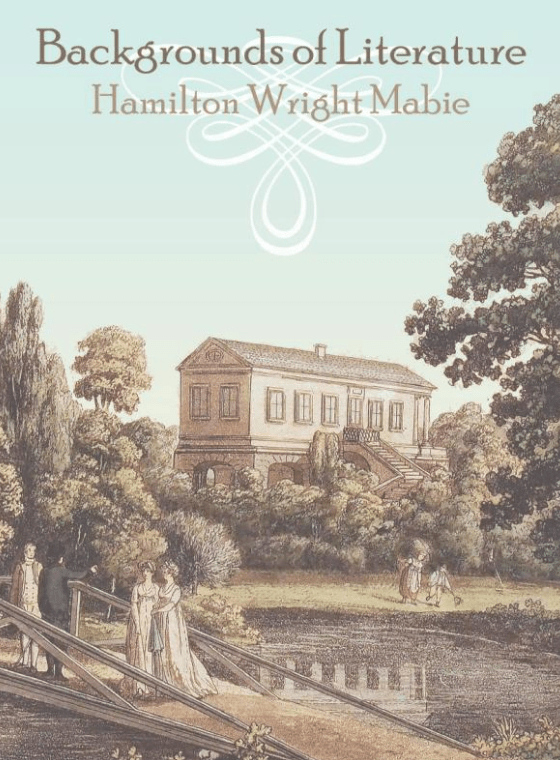
Backgrounds of Literature
Hamilton Wright Mabie, A.M., L.H.D., LL.D. (1846–1916) was an author and lecturer. He attended Williams College and later Columbia Law School. However, he hated practicing law and started working at a weekly magazine, Christian Union, later renamed The Outlook. Mabie edited a series of volumes for Doubleday, Page & Co. called Every Child Should Know.

Fifty-Two Sunday Dinners: A Book of Recipes
This collection of recipes by Elizabeth O. Hiller was immensely popular in the early 1900s, as it was reprinted in conjunction with a variety of advertisements. In this work, Hiller offers a collection of large Sunday meals for each month, based on available seasonal ingredients and on holidays often celebrated during these times.
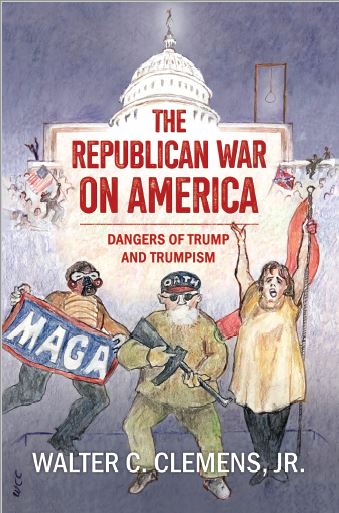
The Republican War on America: Dangers of Trump and Trumpism
Republicans wage war on American democracy. They are driven by an ex-president and his Trumpists–the many politicians who wrap themselves in his cloak of racism, religiosity, and the Big Lie. Political historian Clemens explains what has gone wrong and what needs to be done to reboot America.

Siddhartha: Life of the Buddha
Siddhartha: Life of the Buddha is an illustrated story for adults and children about the Buddha’s birth, enlightenment and work for social justice. It includes illustrations from Pagan, Burma which are provided by Rev. Sitagu Sayadaw. The story is inspirational about the perfection of wisdom, translating spiritual practice into action aimed at healing the world.

User-Centric Design
Designing applications can be a challenge for many designers. The user can play a crucial role in the development process by including them in the different development phases. The user can provide information on what is critical for the application and where user-centric design begins.

The Song Lore of Ireland: Erin’s Story in Music and Verse
Chloe Angeline Stickney Hall (1830 – 1892) was a gifted mathematician and a pioneer for women’s rights.

An Astronomer’s Wife: The Biography Of Angeline Hall
Chloe Angeline Stickney Hall (1830 – 1892) was a gifted mathematician and a pioneer for women’s rights.
Discourse of the Inquisitive
From the basic building blocks of writing to directive feedback, from academic discourse to creative art forms, and from military students to adult learners, the anthology is filled with tips, tricks, and strategies to improve communication skills inside the classroom and out.
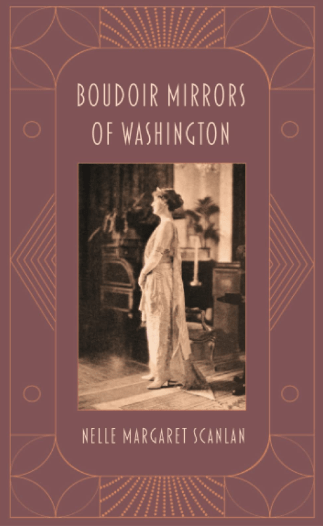
Boudoir Mirrors of Washington
The Lindlahrs, Henry and Anna, wrote extensively of the merits of a vegetarian diet, and are considered to be the authors of “one of the cornerstone texts of American naturopathic medicine.” While science has shown that some of their findings in this work are false, many have been shown to be helpful in improving health, such as access to sunlight and fresh air, and a plant-based diet. This work contains a variety of recipes for creating vegetarian meals.

 Westphalia Press