
Since its founding on May 31, 1801, the Scottish Rite has, like all aspects of Freemasonry, made an impact on America. The Supreme Council, 33°, Ancient and Accept Scottish Rite of Freemasonry for the Southern Jurisdiction, USA, has been particularly blessed to have had a significant number of our most decorated members serve in the Congress of the United States. This book, years in the making, provides a carefully researched and documented biographical dictionary listing the members of Congress who held the highest honor of Scottish Rite, that of the 33rd degree. This reference volume should prove useful to researchers of general history, but most especially to Masonic researchers.
Tag: us politics

The Original Indiana Territory: It Was in West Virginia
Virgil Anson Lewis (1834–1902) was an American historian, archivist, and educator known for his significant contributions to the historical understanding of West Virginia, particularly during the early days of the state’s formation. He played a pivotal role in preserving and documenting the history of the region through his research, writing, and public service.

Elliot Richardson: A Man of Principle
Attorney General Elliot Richardson knew that U.S. Attorney George Beall was investigating kickbacks in the Baltimore County Executive’s Office. On July 3, 1973, Richardson met with Beall and his three assistant prosecutors. The meeting was preceded by a telephone call Richardson received from White House Chief of Staff Alexander Haig who reported President Nixon’s fury at the latest news about Special Prosecutor Archibald Cox’s investigation.

How the Rampant Proliferation of Disinformation Has Become the New Pandemic, and What To Do About It
How the Rampant Proliferation of Disinformation has become the new Pandemic, examines the causes of the overwhelming tidal wave of fake news, misinformation, disinformation, and propaganda, and the increase in information illiteracy and mistrust in higher education and traditional, vetted news outlets that make fact-checking a priority.
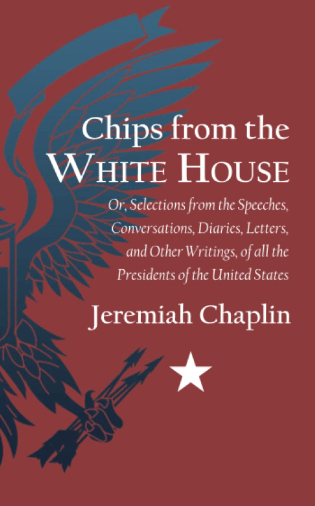
Chips from the White House: Or, Selections from the Speeches, Conversations, Diaries, Letters, and Other Writings, of all the Presidents of the United States
Jeremiah Chaplin (1776 – 1841) was a theologian, educator and an author. He was born in 1776 in Massachusetts, later attending Brown University. After he graduated, he remained studying theology while tutoring students at Brown. In 1802, he moved to Danvers, Massachusetts in order to minister a Baptist church there. He remained there until 1817, when an opportunity to become president of Waterville College became available to Chaplin. He remained in that role until 1833. Afterwards he focused on preaching throughout Massachusetts, Connecticut and New York. Chaplin wrote books, but often not related to theology, including: The Life of Benjamin Franklin (1876) and Words of our Hero, Ulysses S. Grant (1886).

Familiar Letters of John Adams and His Wife Abigail Adams During the Revolution with a Memoir of Mrs. Adams
Abigail Adams (1744-1818) was a founder of the United States. Despite much of the gendered politics that pushed women away from politics, Abigail and her husband, John Adams, corresponded frequently about politics and the new government formation. John Adams served as the second president of the United States, from 1797 to 1801.
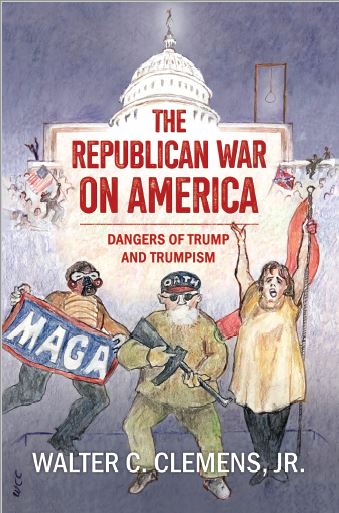
The Republican War on America: Dangers of Trump and Trumpism
Republicans wage war on American democracy. They are driven by an ex-president and his Trumpists–the many politicians who wrap themselves in his cloak of racism, religiosity, and the Big Lie. Political historian Clemens explains what has gone wrong and what needs to be done to reboot America.
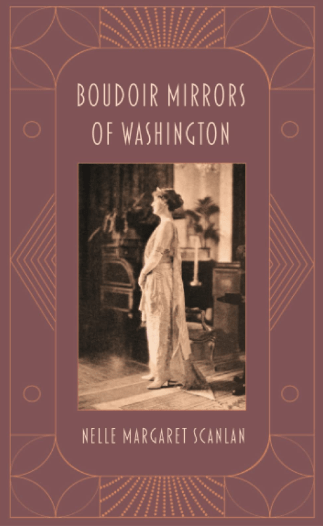
Boudoir Mirrors of Washington
The Lindlahrs, Henry and Anna, wrote extensively of the merits of a vegetarian diet, and are considered to be the authors of “one of the cornerstone texts of American naturopathic medicine.” While science has shown that some of their findings in this work are false, many have been shown to be helpful in improving health, such as access to sunlight and fresh air, and a plant-based diet. This work contains a variety of recipes for creating vegetarian meals.

The Limits of Moderation: Jimmy Carter and the Ironies of American Liberalism
The Limits of Moderation: Jimmy Carter and the Ironies of American Liberalism is not a finished product. Consider this book a primary source, an unfinished manuscript of the type historians might encounter while digging into the papers of an intellectual figure in an archive.

Dante Redux: Trump’s Towering Inferno
Most of us have always assumed that Donald Trump and his cronies are going to Hell. But to which corners, and what torments? 700 years after Dante published his epic poem Inferno, Wayne Lavender has resurrected this storyline and placed Donald Trump and his enablers in their own Hell.
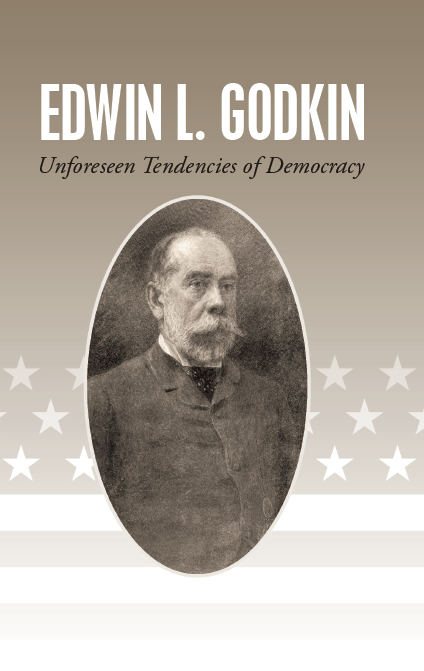
Unforeseen Tendencies of Democracy
In this work, initially released in 1898, author Edwin Godkin offers a volume of essays on American political institutions, sometimes contrasting them with those found across Europe.

Donald J. Trump, The 45th U.S. Presidency and Beyond: International Perspectives
The reality is that under Trump’s presidency, there was a gradual, but clearly perceptible, decline of American influence in regional and global arenas.

Donald J. Trump’s Presidency: International Perspectives
Editors: John Dixon and Max J. Skidmore Purchase through Amazon President Donald J. Trump’s foreign policy rhetoric and actions become more understandable by reference to his personality traits, his worldview, and his view of the world. His campaign rhetoric catered to Americans comfortable with isolationism and certainly with no appetite for foreign military engagements. So, his… Continue reading Donald J. Trump’s Presidency: International Perspectives

Unworkable Conservatism: Small Government, Freemarkets, and Impracticality
by Max J. Skidmore Purchase through Amazon Unworkable Conservatism looks at what passes these days for “conservative” principles—small government, low taxes, minimal regulation—and demonstrates that they are not feasible under modern conditions. First, for many reasons, they are difficult, at best, to implement. Second, if they are put into place, they please no one, not even… Continue reading Unworkable Conservatism: Small Government, Freemarkets, and Impracticality
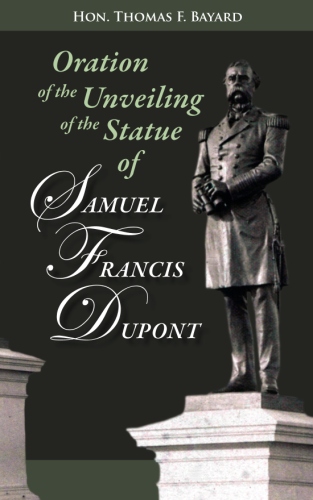
Oration on the Unveiling of the Statue of Samuel Francis DuPont: Rear Admiral, U.S.N., at Washington, DC on December 20, 1884
by Hon. Thomas F. Bayard Purchase through Amazon Rear Admiral Samuel Francis Du Pont (1803-1865) served in the United States Navy, specifically during the Mexican- American War and the Civil War. His uncle, Eleuthere Irenee du Pont, was the founder of what is commonly known as the DuPont chemical concern, but is officially E. I.… Continue reading Oration on the Unveiling of the Statue of Samuel Francis DuPont: Rear Admiral, U.S.N., at Washington, DC on December 20, 1884
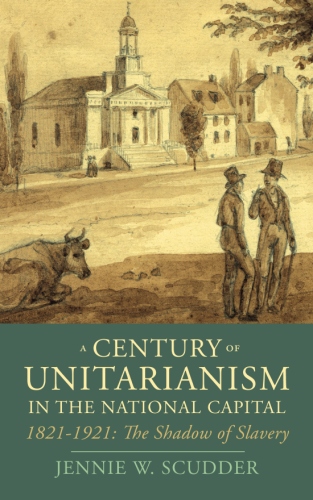
A Century of Unitarianism in the National Capital, 1821-1921: The Shadow of Slavery
by Jennie W. Scudder Purchase through Amazon Jennie Scudder’s work traces the sometimes controversial history of Unitarianism in the District of Columbia, centering on All Souls Unitarian Church. Scudder publshed the volume initially in 1909, but it wasn’t copyrighted until 1921, when the Church celebrated its hundredth birthday. The account includes the development of… Continue reading A Century of Unitarianism in the National Capital, 1821-1921: The Shadow of Slavery

Collecting American Presidential Autographs
Purchase through Amazon Paul C. Richards, Edited and Introduced by Paul Rich The collecting of autographs of American presidents is done with a passion that is not found about similar figures in other countries. Canadian prime ministers or Finnish presidents are not the focus of hobbyists. The enthusiasm of getting a set of presidential signatures is… Continue reading Collecting American Presidential Autographs
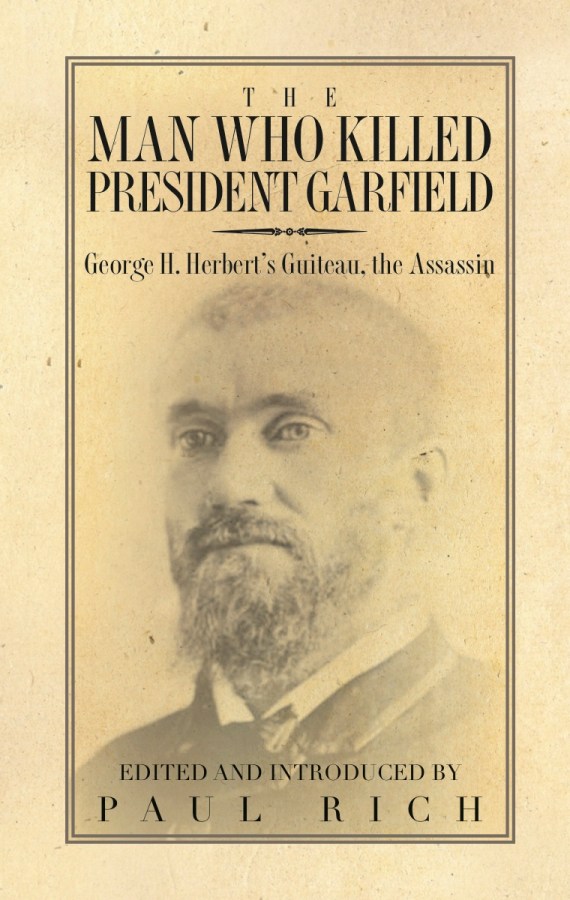
The Man Who Killed President Garfield: George H. Herbert’s Guiteau the Assassin
Purchase through Amazon The assassination of President James Garfield has been variously blamed for the decline of the Utopian Oneida community where the murderer once lived, the reform of the American civil service by shocked legislators who noted that the motive seemed to be a legitimate denial of political patronage, and the movement for… Continue reading The Man Who Killed President Garfield: George H. Herbert’s Guiteau the Assassin

 Westphalia Press