
Silvio Pellico was an Italian writer, poet, and dramatist who lived during the 19th century. He was born on June 24, 1789, in Saluzzo, and he passed away on January 31, 1854, in Turin, Italy. Pellico is best known for his role in the Italian unification movement and for his literary works.
Tag: criminology

Report of the Trial of Friends, in the City of Philadelphia, June, 1828, Before the Honorable Edward King: Or, the Case of Edmund Shotwell, Joseph Lukins, Charles Middleton, and Two Others
Transcribed by M. T. C. Gould Purchase There were several Meetings in Philadelphia, and the trial detailed here arose out of a conflict between two local Friends groups and a burying ground. Part of a wall was removed, and a gate was erected, along with some temporary buildings. Besides the three Friends, Edmund Shotwell, Joseph… Continue reading Report of the Trial of Friends, in the City of Philadelphia, June, 1828, Before the Honorable Edward King: Or, the Case of Edmund Shotwell, Joseph Lukins, Charles Middleton, and Two Others
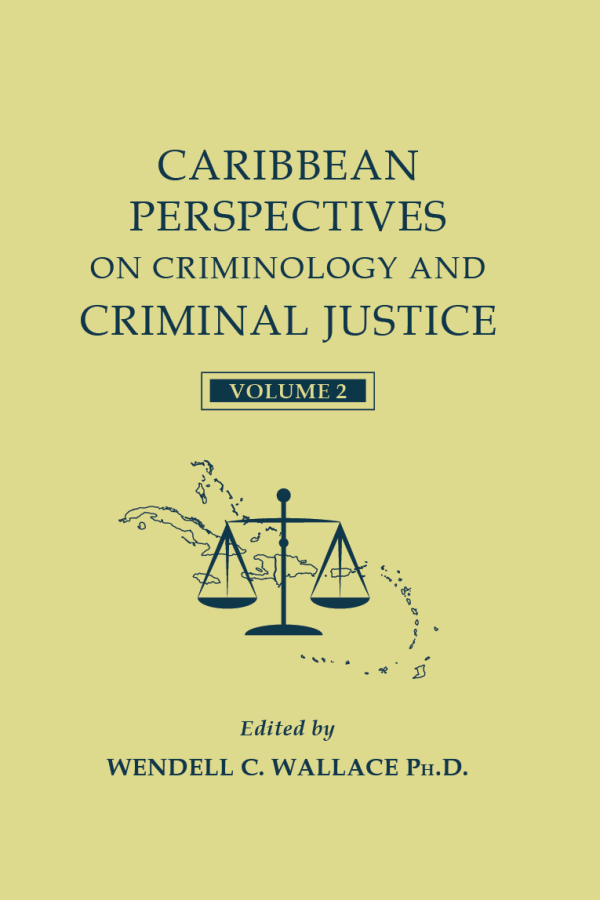
Caribbean Perspectives on Criminology and Criminal Justice: Volume 2
Dr. Wendell C. Wallace, Editor Purchase In this volume and the one that precedes it, Dr Wendell C. Wallace has not only succeeded in bringing together a fascinating collection of papers that illustrate the uniqueness (as well as sharedness) of Caribbean Criminology, he has succeeded in putting Caribbean Criminology very firmly back on the intellectual… Continue reading Caribbean Perspectives on Criminology and Criminal Justice: Volume 2

Old-Time Punishments
by William Andrews Purchase Originally published in 1890, this work sheds interesting commentary and illustration of various treatments and devices used to punish people convicted of a crime. However, as Andrews discusses, sometimes these trials were a sham, or simply through public opinion and not evidence. Many of these punishments were awful and could lead… Continue reading Old-Time Punishments

Caribbean Perspectives on Criminology and Criminal Justice: Volume 1
Editor: Wendell C. Wallace, PhD Purchase If your desire is to attain a greater understanding of theoretical frameworks, methodologies, and pragmatic discussions on criminology and criminal justice in the Caribbean, then this is the book for you. This book is a direct response to the call for a Caribbean Criminology as espoused by Ken Pryce… Continue reading Caribbean Perspectives on Criminology and Criminal Justice: Volume 1

The Indiana Supreme Court, With Some Account of the Courts Preceding It: An Historical Sketch
by Timothy Edward Howard Purchase Timothy Edward Howard was born on January 27, 1837 in Northfield, Michigan. He went on to attend Notre Dame, but he put his undergraduate degree on hold to serve in the Civil War for the Union. After only a month in service, he was terribly wounded at the Battle of… Continue reading The Indiana Supreme Court, With Some Account of the Courts Preceding It: An Historical Sketch

The Death Penalty in the Caribbean: Perspectives from the Police
Editor, Wendell C. Wallace PhD Purchase through Amazon “The Death Penalty in the Caribbean is a novel, thought-provoking and timely contribution to the contentious debate of the Death Penalty in the Anglophone Caribbean. This book is directed at policy makers, law enforcement practitioners and scholars, and is a must read for students of criminology, international… Continue reading The Death Penalty in the Caribbean: Perspectives from the Police

ABC of Criminology
by Alain Bauer Purchase through Amazon Durkheim: There is no society known where a more or less developed criminality is not found under different forms. No people exists whose morality is not daily infringed upon. We must therefore call crime necessary and declare that it cannot be non-existent, that the fundamental conditions of social organization,… Continue reading ABC of Criminology

Issues in Maritime Cyber Security
Editors: Dr. Joe DiRenzo III, Dr. Nicole K. Drumhiller, Dr. Fred S. Roberts
The world relies on maritime commerce to move exceptionally large portions of goods, services, and people. Collectively this effort comprises the Maritime Transportation System or MTS. A major component of this daunting multifaceted enterprise are cyber networks, and the infrastructure they control. From the complex programs managing the loading and unloading of containers to waiting trucks, to the global navigation systems onboard vessels, to the hydraulic valves designed to protect spills into waterways that are located and controlled by cyber systems within chemical, water/wastewater, or petroleum plants, the MTS is becoming increasingly automated.
The impact of the cyber element on the international MTS is significant. Yet, with the clear advantages this brings, come vulnerabilities, and challenges. Researchers have demonstrated that it is possible to remotely take control of a vessel by spoofing its GPS. The news has reported attacks that shut down a floating oil rig by tilting it. The electronic positioning software systems on ships are vulnerable to attacks that could modify les and charts, causing potential for serious damage. The complexity of the problem of making our MTS safe from cyber attack is daunting and the need for all stakeholders in both government (at all levels) and private industry to be involved in cyber security is more significant than ever as the use of the MTS continues to grow.
 While there is literature about the maritime transportation system, and about cyber security, to date there is very little literature on this converging area. This pioneering book is beneficial to a variety of audiences, as a text book in courses looking at risk analysis, national security, cyber threats, or
maritime policy; as a source of research problems ranging from the technical area to policy; and for practitioners in government and the private sector interested in a clear explanation of the array of cyber risks and potential cyber-defense issues impacting the maritime community.
About the Editors: Dr. Joe DiRenzo III is a retired Coast Guard Officer. Dr. Nicole K. Drumhiller is the Program Director of Intelligence Studies at American Military University. Dr. Fred S. Roberts is Director of the Department of Homeland Security University Center of Excellence CCICADA, based at Rutgers University.
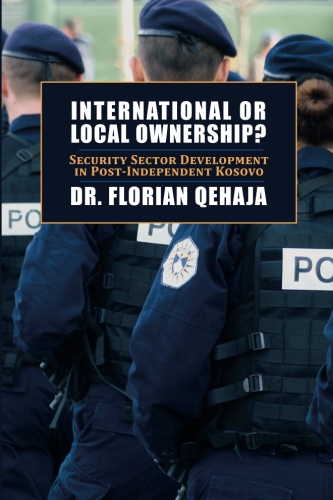
International or Local Ownership?: Security Sector Development in Post-Independent Kosovo
by Dr. Florian Qehaja Purchase through Amazon International or Local Ownership? contributes to the debate on the concept of local ownership in post-conflict settings, and discussions on international relations, peacebuilding, security and development studies. It utilizes extensive data collection, including public opinion surveys conducted throughout the country, in order to introduce the concept of local… Continue reading International or Local Ownership?: Security Sector Development in Post-Independent Kosovo
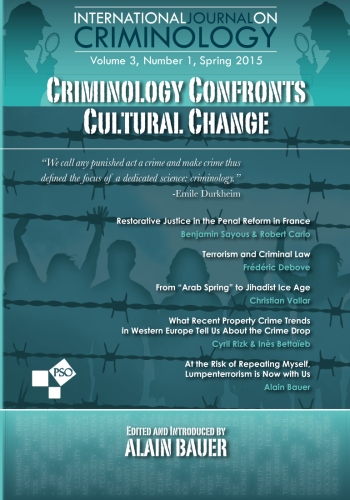
Criminology Confronts Cultural Change
Edited by Alain Bauer Purchase through Amazon Is using the humanities and social sciences (psychology, sociology, law, etc.) to understand the crime, the criminal, the victim, criminality, and society’s reaction to crime a science? A crime is the unique combination of a perpetrator, a victim, and a set of circumstances. Its individual and quantitative analysis… Continue reading Criminology Confronts Cultural Change
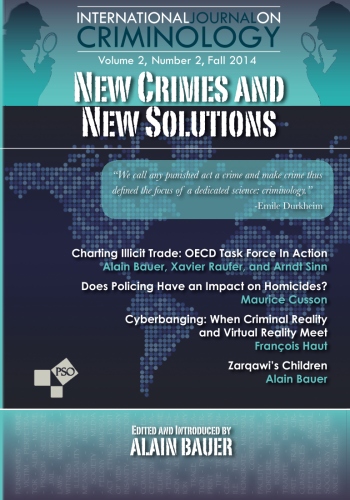
New Crimes and New Solutions: International Journal of Criminology
New Crimes and New Solutions: International Journal of Criminology Edited by Alain Bauer Purchase through Amazon Coming to Kindle soon! Is using the humanities and social sciences (psychology, sociology,law, etc.) to understand the crime, the criminal, the victim, criminality, and society’s reaction to crime ascience? A crime is the unique combination of a perpetrator, a victim,… Continue reading New Crimes and New Solutions: International Journal of Criminology
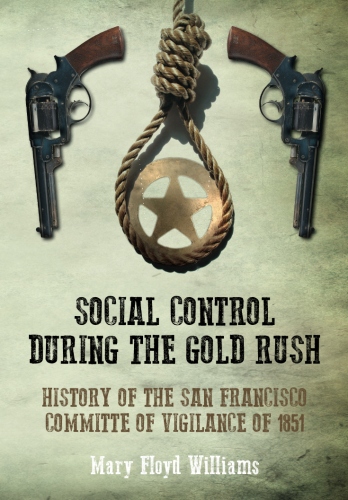
History of the San Francisco Committee of Vigilance of 1851
by Mary Floyd Williams Ph.D. Purchase through Amazon Mary Floyd Williams gives a detailed account of the San Francisco Committee of Vigilance formed in 1851 (it was later reincarnated in 1856. Although the Committee, formed by a group of vigilantes, lasted only about three months, they were responsible for the hanging of at least eight… Continue reading History of the San Francisco Committee of Vigilance of 1851
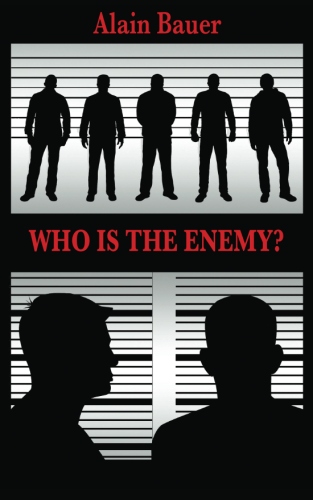
Who is the Enemy?: The Revolution in Terrorism Affairs and the Ways to Understand It
by Alain Bauer Purchase on Amazon Few people have the advantages that Alain Bauer possesses in providing an overview of the current world security crisis. He is the ultimate example of “been there, done that”. Welcome in the inner circles of a half dozen countries, his opinions are eagerly sought as the efforts to cope… Continue reading Who is the Enemy?: The Revolution in Terrorism Affairs and the Ways to Understand It
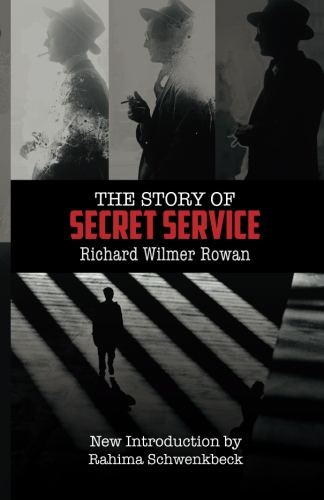
The Story of Secret Service
by Richard Wilmer Rowan, Introduction by Rahima Schwenkbeck Purchase through Amazon Few works attempt to be as ambitious as Richard Wilmer Rowan’s The Story of Secret Service. Rowan packs in thirty-three centuries of world history in this volume, tracing a long history of espionage and its impact. The history of espionage is a particularly difficult… Continue reading The Story of Secret Service
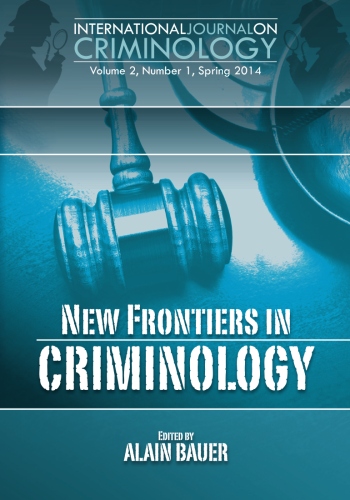
New Frontiers in Criminology
Edited by Alain Bauer Purchase through Amazon Criminology owes a great deal as a discipline to the eighteenth century social philosophers, particularly those like Cesare Beccaria who partly built some of their arguments on social contract theory. Certainly some of the aspects of the debate over free will date from then. The publishing of Beccaria’s Dei… Continue reading New Frontiers in Criminology

Spies I Knew
by Marthe McKenna Purchase on Amazon | Purchase on CreateSpace Born in Flanders, Marthe Cnockaert McKenna (1892-1986) was recruited in 1915, during World War I, to an Anglo-Belgian espionage ring. Her cover was as a nurse, and the Germans awarded her the Iron Cross for her hospital work. After a period as a double agent she was apprehended by them… Continue reading Spies I Knew
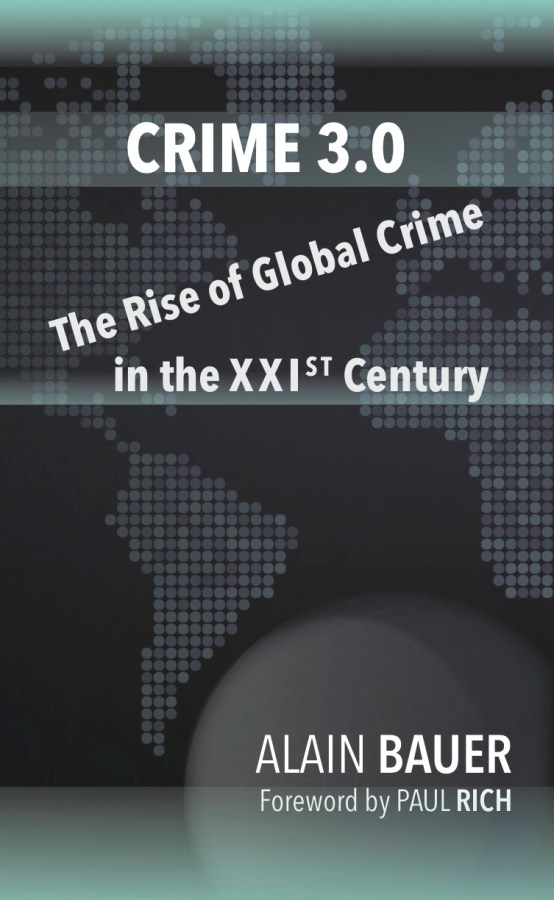
Crime 3.0: The Rise of Global Crime in the XXIst Century
by Alain Bauer with a forward by Paul Rich Alain Bauer argues that we need, with considerable immediacy, to press the formal study of crime in the academy, and that more resources need to be channeled towards that purpose. The approach in universities, if they do deign to study the subject, is often relegated to… Continue reading Crime 3.0: The Rise of Global Crime in the XXIst Century
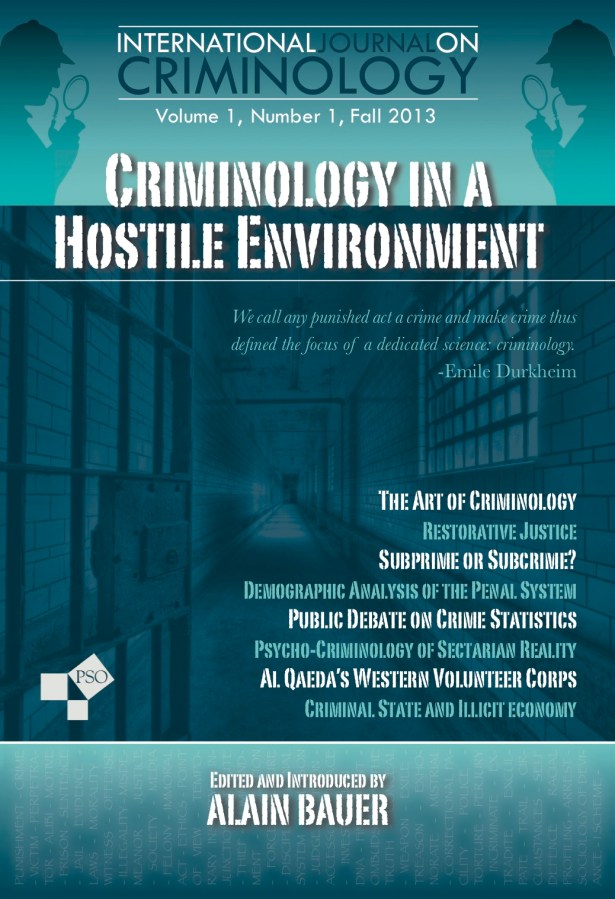
Criminology in a Hostile Environment
Edited by Alain Bauer Is using the humanities and social sciences (psychology, sociology, law, etc.) to understand the crime, the criminal, the victim, criminality, and society’s reaction to crime a science? A crime is the unique combination of a perpetrator, a victim, and a set of circumstances. Its individual and quantitative analysis requires scientific methods… Continue reading Criminology in a Hostile Environment

 Westphalia Press